

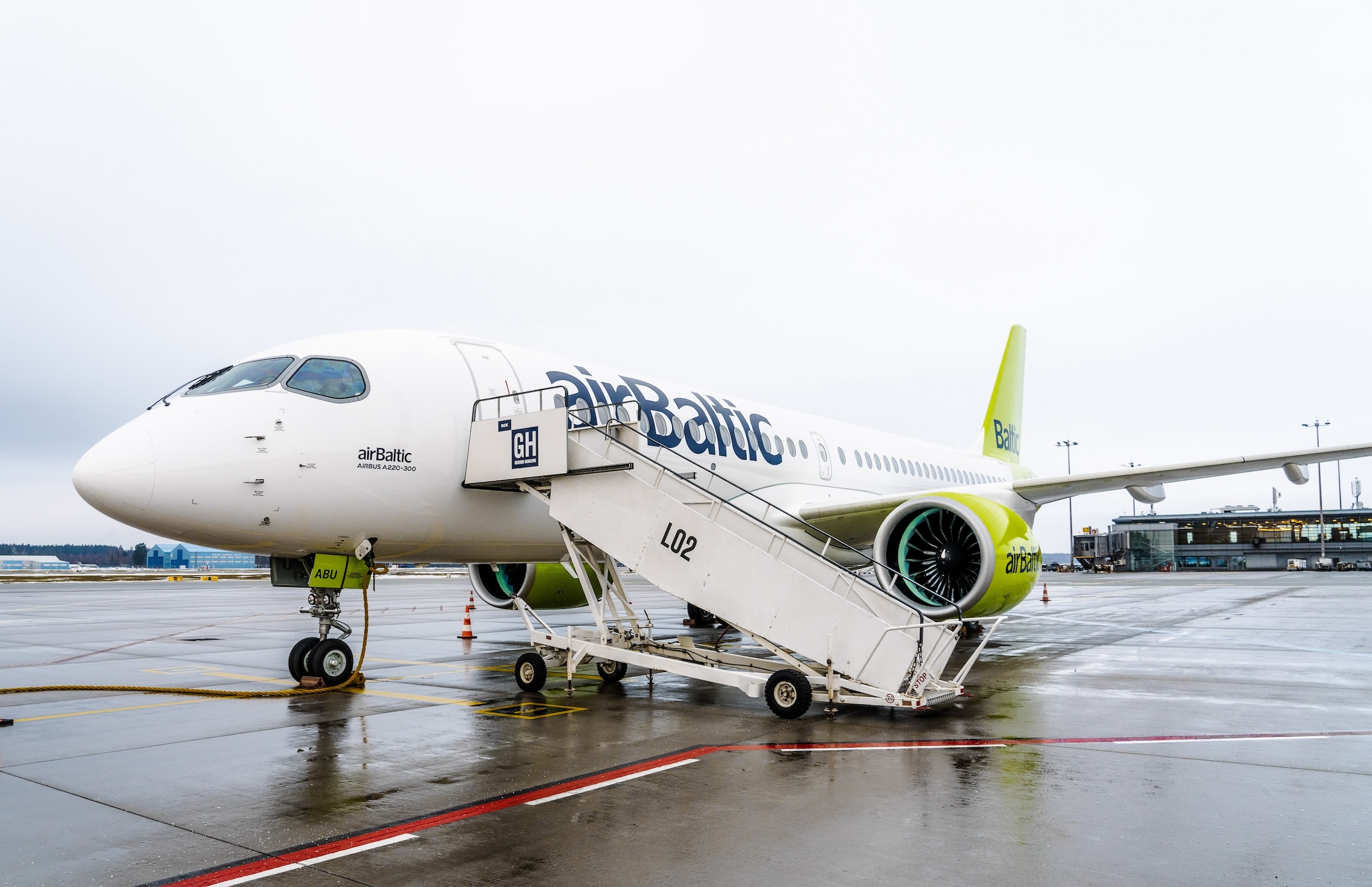
Latvian airline airBaltic had average of nine aircraft on ground (AOG), driven by the ongoing Pratt & Whitney geared turbofan (GTF) engine issues. This marks a decline from the 13 average AOG in the first quarter and fourth quarter of last year.
During its second quarter earnings call, the airline’s interim CEO Pauls Calitis said the company is “finally” seeing some stability after “three years of very disturbed operations”.
He added: “In the first quarter, we were cautiously optimistic where we were starting to see some indications that the situation is starting to normalise. After the second quarter, I can now say with much higher confidence that the situation is improving.
“The number of engines available has been on forecast, meaning that we don’t have last minute shortages.”
The company said engine time on wing improvements are also supporting its positive outlook. airBaltic had three wet leased aircraft during the second quarter, with the three aircraft introduced on March 29, 2025. The airline said no more than three aircraft required, with that expected to “de-escalate or improve”.
“Predictability for ACMI-in requirement ensures timely planning and stability,” the airline read in its report.
“We’re expecting a significantly improved situation in 2026 with this year trending in the right direction,” said Calitis. The company has yet to determine its final forecast, but expects a “minimum number” of AOG next year.
By mid-2026, the airline expects to have 57 aircraft. Seven aircraft are expected to be delivered from lessors in the fourth quarter and the first half of 2026.
At the start of the year, airBaltic cancelled over 4,500 flights for the summer. This cancellation was largely driven by a forecast provided by Pratt & Whitney in December, which the then-CEO of airBaltic Martin Gauss said had significantly increased the missing engines for the peak summer.
Speaking to Airline Economics in Dublin in January, Gauss said: “That caused our problem because it was too late for us to react, and we had to find a way to mitigate the impact.”
Only a few months later, Gauss would be ousted as the airline’s leader in April, with him stating on social media that the decision was not his.
During the earnings call, the company said it is in the “final stages” of its selection process for Gauss’ successor and is expected to be completed in the next few weeks.
For the quarter, the company had wet leased out 19 aircraft, reaching a peak for the company and marking a 5.9% increase in ACMI-out revenue.
Operating revenues totalled €216.9 million, up from €207 million. Operating costs totalled €205.4 million, up slightly from €201.2 million. For the quarter, operating profits totalled €11.5 million, up from €5.9 million, while net profit was €27.6 million – swinging from a loss of €24.2 million a year prior.
For the first half, the company reported a net loss of €1.7 million, narrowing significantly from its €88.8 million loss in the first half of 2024. The stronger second quarter drove this recovery.
Passenger volumes in the second quarter grew by 8.3%, while load factor averaged at 80.2% in the quarter, up 2.4 percentage points.