

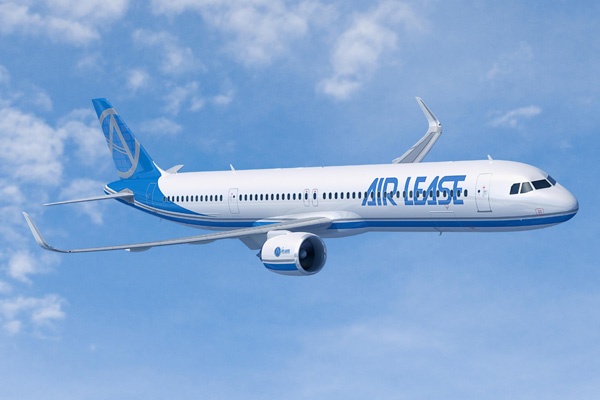
Air Lease Corporation CEO and president John Plueger said during the company’s first quarter earnings call that tariffs would “further weaken the supply chain” to airframe OEMs. He added: “This means that global airline fleets will remain well behind the power curve, replacing older aircraft fleets.”
Air Lease reported strong results for the first quarter of 2025, driven by sustained strong demand for aircraft leasing.
“Tariffs are contractually the responsibility of the airline customers importing an aircraft into their country,” continued Plueger. “The airline is the importer into their own country, not us. As of now, Air Lease has no aircraft delivering to countries where tariffs applicable to commercial aircraft exist or have been announced. We have no aircraft going to China, and in fact, our total China exposure is now de minimis.”
During the company’s earnings call, Plueger said the company maintains its outlook for the year, expecting $3bn to $3.5bn of new aircraft delivered in 2025. Additionally, the company expects around $800 million of deliveries for the second quarter.
Air Lease said it was recently notified of delivery delays from Airbus, primarily impacting its 2027 and 2028 A320 and A321neo deliveries by about a year.
In an SEC filing, the company said it expects around 38 A320neo family aircraft in 2027, as well as 34 in both 2028 and 2029. Additionally, the company expects Boeing deliveries to continue to be delayed but is unable to estimate the extent of the delays.
“The company remains in discussions with Airbus and Boeing to determine the extent and duration of delivery delays; however, the company is not yet able to determine the full impact of these delays… delivery delays are expected to extend for at least the next three to four years,” Air Lease read in its filing.
Revenues were up 11.3% to $738.3 million for the period. Operating expenses grew by 13.4%, reaching $598.6 million. The results included $331.9 million write off related to its Russia insurance settlements.
“The significant insurance recoveries we have received to date puts us at our target debt-to-equity ratio,” added Plueger. “This now allows us to consider a wide range of capital allocation, and we are doing so, including organic and inorganic growth and returning capital to shareholders.”
The company had been targeting a debt-to-equity ratio of 2.5x.
Air Lease CFO Greg Willis added: “We do expect to see some movement in this ratio from quarter to quarter as we continue to take delivery of aircraft from our orderbook, and the timing of aircraft sales.”
The company said it will continue to receive additional insurance settlements, allowing for a more complete view of its capital position.
Rental revenues during the quarter increased around 5% to $645 million. Aircraft sales, trading and other revenues for the quarter was up 90% to $93 million.
The company’s net income more than tripled to $364.8 million in the quarter, compared to $97.4 million.
During the quarter, the company sold 16 aircraft for $521 million in sales proceeds. In addition, it purchased 14 new aircraft, adding approximately $800 million in flight equipment to its balance sheet.
As of March 31, 2025, the company had approximately $741 million of aircraft in its sales pipeline. In addition, the company had a total of 804 aircraft in its fleet, comprising 487 owned, 57 managed, and 260 on order. The company’s weighted average fleet age was 4.7 years as of the end of March, as well as its weighted average remaining lease term was 7.2 years.
Air Lease’s board approved a quarterly cash dividend of $0.22 per share, which will be paid on July 9, 2025.
The company ended the quarter with a total liquidity of $7.4bn.