

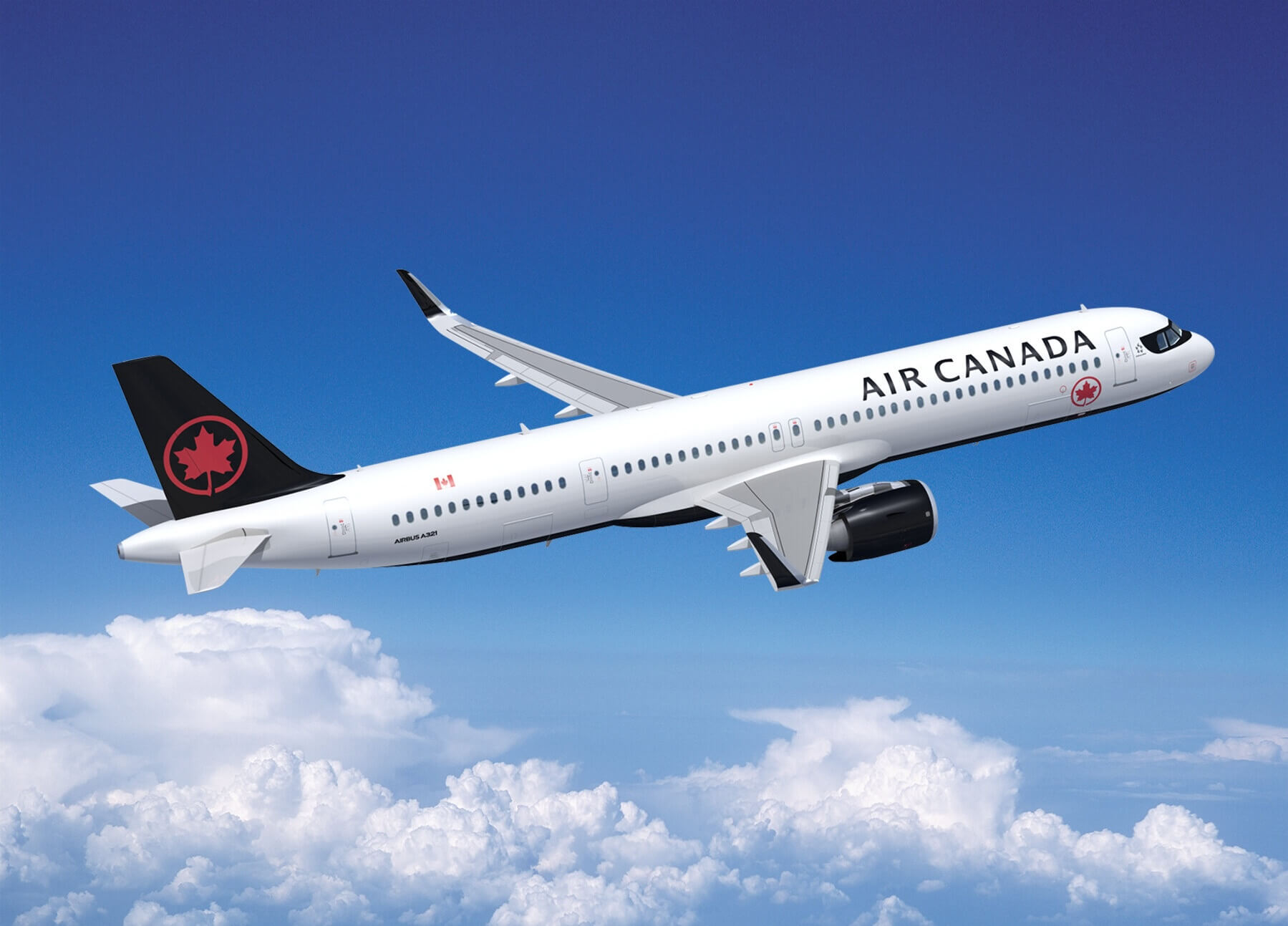
Air Canada has reported a third-quarter profit of C$264 million, down from C$2.04 billion during the same period last year.
Operating revenue came in at C$5.8bn for the quarter, a decline of 5%. Diluted earnings per share (EPS) was C$0.88, down from C$5.68 during the same period last year.
The company carried 12.2 million passengers during the quarter, a drop of 3.6%, and capacity as available seat miles (ASM) fell 2.1%.
Operating income came in at C$284 million with a margin of 4.9%. Adjusted EBITDA came in at C$961 million with a margin of 16.6%.
Net cash flows from operating activities came in at C$813 million, and free cash flow came in at C$211 million.
Michael Rousseau, president and CEO of Air Canada, said the company delivered a “solid” operational and financial performance during the quarter, after adjusting for a three-day flight attendants strike in August, during the peak summer season.
“Our financial results met our expectations, with strength in the Atlantic market and in our premium cabins,” he said.
“Operational metrics, such as on-time performance and net promoter score, exceeded both internal targets and last year’s levels for the quarter and year-to-date.
“Our underlying business fundamentals are very strong. There is good booking momentum in the fourth quarter and early positive indicators into the first quarter of 2026.”
The company narrowed its full-year EBITDA guidance to between C$2.95 billion and C$3.05 billion, and also narrowed its ASM capacity guidance to a 0.75% increase versus 2024.
Full-year adjusted cost per available seat mile (CASM) guidance was left unchanged at 14.60 ¢ to 14.70 ¢, and full-year free cash flow guidance was raised to between breakeven and C$200 million.
The guidance assumes a “marginal” Canadian GDP growth for the year, an average USD/CAD exchange rate of C$1.40, and an average jet fuel price of CAD $0.91. Air Canada has hedged 22% of its expected fourth-quarter fuel consumption.
In an investor call, management said that bookings had rebounded quickly following the flight attendants strike in August, which cancelled about 3,200 flights, and that momentum is rising into the fourth quarter.
Over the next 12 months, Rousseau said the company will deliver growth through continued operational improvements and modernisation of its fleet.
“Our focus is on preparing the airline to grow and expand margins as we transform our fleet with the arrival of best-in-class aircraft and a revitalised Rouge offering,” he said, referring to Air Canada’s low-cost subsidiary.
“We will also continue to improve our cost structure through productivity gains, operational efficiencies and constant cost discipline to mitigate near term pressures.”
Air Canada has reduced its 787-10 orderbook from 18 to 14 aircraft, a move that “pleased” analysts at TD Cowen.
The company is now expecting to take delivery of two widebody and 33 narrowbody aircraft in 2026, and is expecting to retire 17 narrowbody aircraft.
Deliveries of 35 aircraft would be a new annual record, and would grow the combined mainline, Rouge, and Express fleet by 3.4%.
Finally, the company has announced a normal course issuer bid (NCIB) to repurchase about 10% of its current public float of shares, at a cost of about C$555 million, based on the closing price of November 4, 2025.
The NCIB will take place between November 2025 and November 2026. Once completed, the public float will be 25% lower than it was in November 2024.