

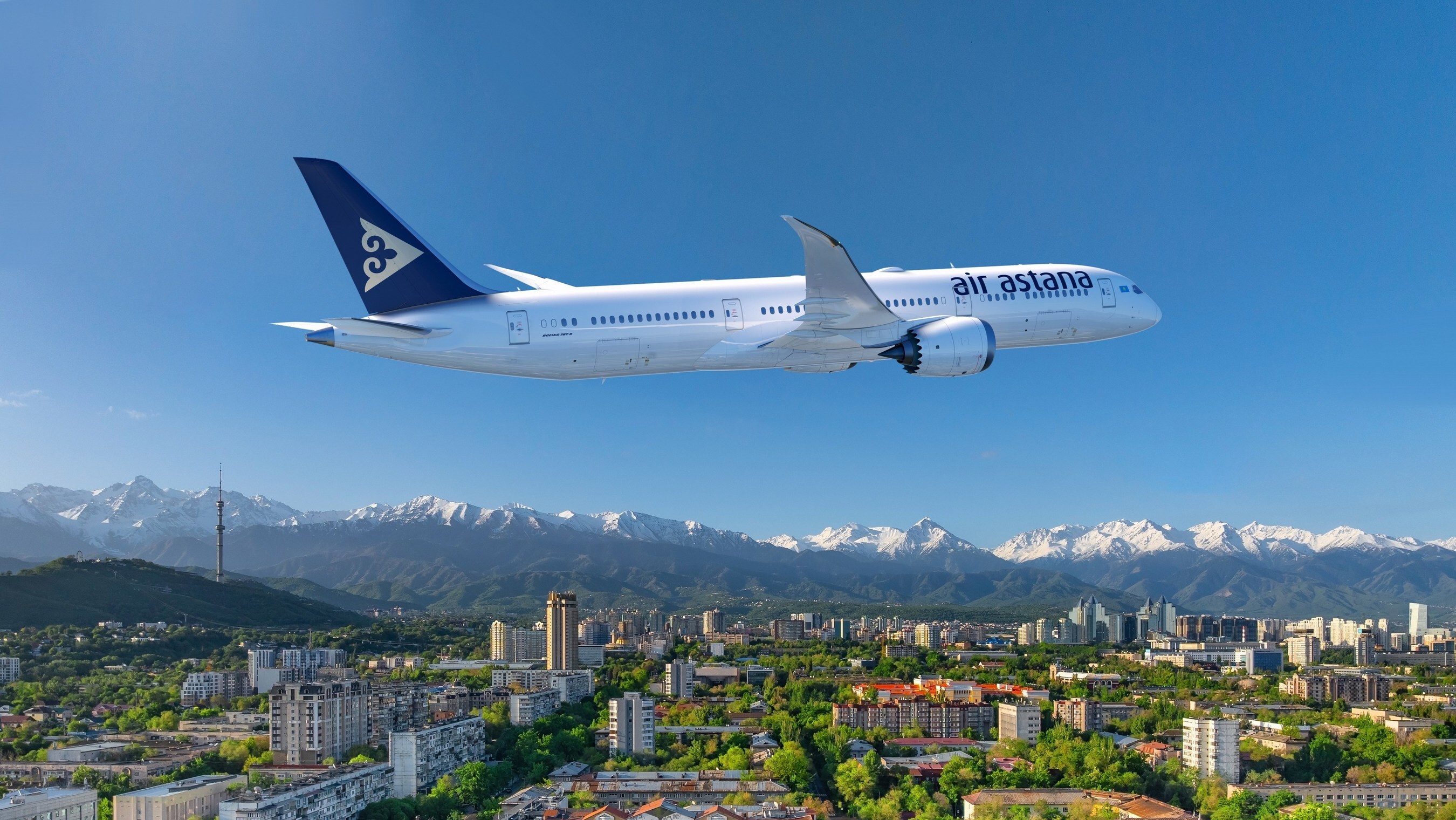
Air Astana has agreed to purchase up to 15 Boeing 787 Dreamliners, marking its largest ever order of aircraft. The order is made up of five firm positions, five options, and five purchase rights.
The newly-ordered aircraft will be delivered between 2032 and 2035. Each aircraft will seat 303 passengers, allowing the Kazakhstan flag carrier to grow capacity across its existing routes and expand into North America.
With three more 787-9 aircraft to be delivered via lessors in 2026-27, Air Astana's 787 fleet is set to grow to up to 18 aircraft.
The total value of the 18 787-9 aircraft, including engines, is $7bn based on manufacturer list prices.
Peter Foster, CEO of Air Astana, said the delivery of the airline's first 787-9 Dreamliner will mark the beginning of its strategic expansion that will connect Central Asia with the rest of the world over the next decade.
"With its customer friendly cabin, fuel efficiency and range flexibility, the fleet of up to 18 Boeing 787-9 aircraft is destined to become an outstanding success with the airline and its discerning passengers," he said.
Air Astana currently operates three Boeing 767 widebody jets across a network that connects Kazakhstan with destinations in Europe, Asia, and the Middle East.
The 787 Dreamliner agreement was signed at the C5+1 Summit, which is currently taking place at the White House.
The C5+1 is a diplomatic summit that has been held every year since 2015 between the US and the foreign ministers of Kazakhstan, Kyrgyzstan, Tajikistan, Turkmenistan, and Uzbekistan. This year’s C5+1 marks the 10th anniversary of the diplomatic platform.
Air Astana began operating Boeing aircraft in 2002, when its start-up fleet was made up of 737-700/800 aircraft, which were used for domestic and Central Asia flights.
One year later, the flag carrier introduced the 757-200 for longer range flights to Asia and Europe.
In 2007 and 2020 respectively, the 737 and 757 aircraft were retired from the fleet.
In 2013, the airline took delivery of three new 767-300ER aircraft, and these continue to be operated on international long-haul and domestic high-density routes.