

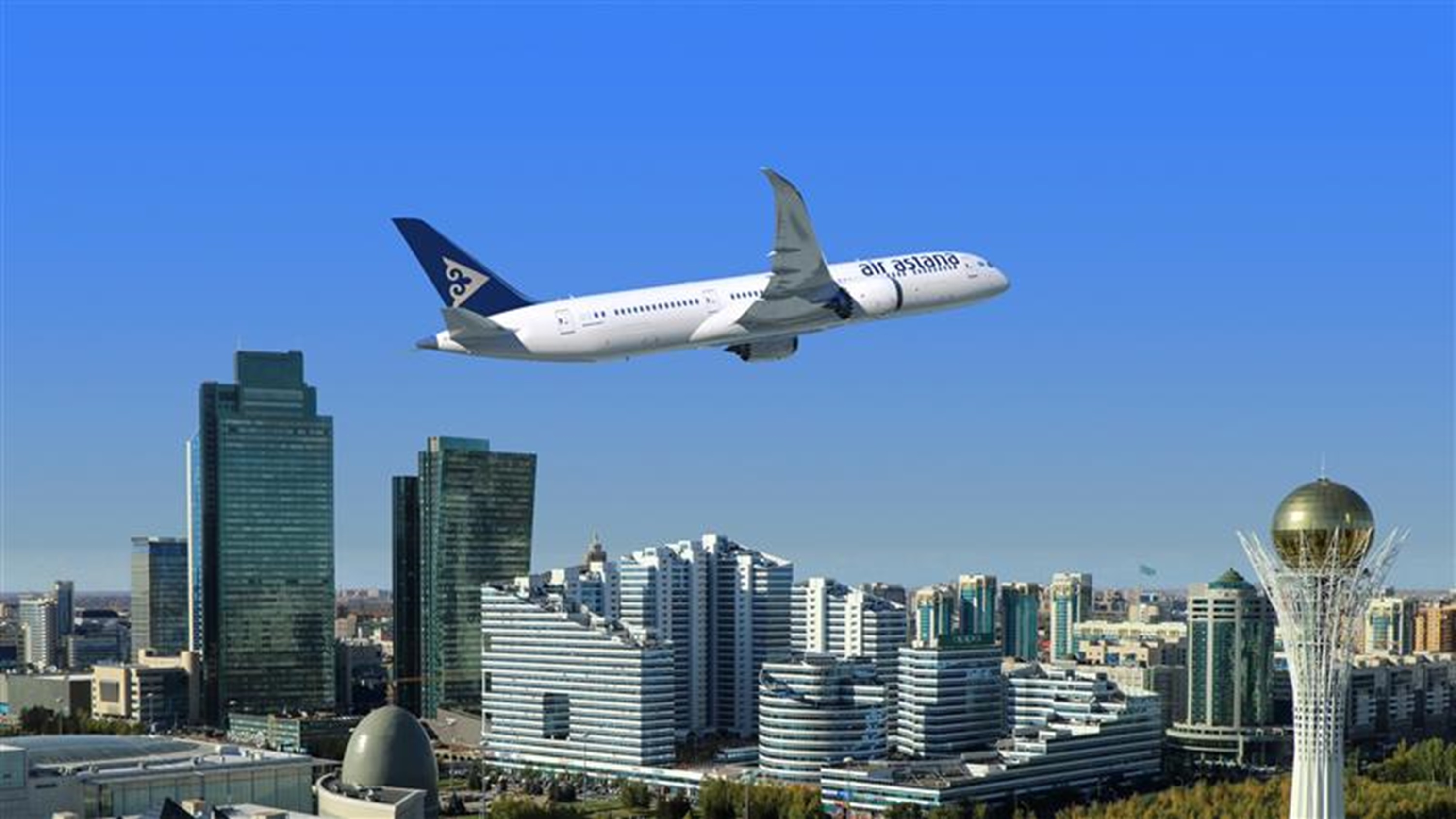
Air Astana has reported strong full-year and fourth-quarter 2025 results despite engine issues “impacting profitability”.
“Pratt & Whitney prompted unscheduled engine removals [UER] are an industry-wide issue,” said Air Astana CEO Peter Foster. “UERs have impacted profitability by limiting growth opportunities and thereby increasing unit costs, driven primarily by lost capacity, compressing the margin between RASK and CASK across the year.”
Total revenues were up 11.4% to $1.5bn for the full-year and EBITDAR was up only 0.8% to $321.2 million.
Unit revenues were down 2.3% to 6.60 cents, while unit costs were up 1.6% to 6.20 cents.
Profit after tax was down $35.9 million to $13.6 million.
“Our mitigation actions, however, have placed us in a strong position to minimise the forward-looking impact,” said Foster. “We see the impact from UERs as diminishing over time.”
The company said it made improvements to unit revenues towards the end of the third quarter with a “particular visible recovery” in the fourth quarter, which saw unit revenues increase 9.8%.
“That gives us further confidence in our business with focus on CASK. As we start growing and spreading costs over a bigger capacity, we will achieve the margins we aspire to,” said Foster.
For 2026, the airline said it remains on course to deliver growth for the year by realigning capacity and retaining a load factor in the low- to mid-80s.
Air Astana said medium-term projections for its EBITDAR margin to be mid- to high-20s, with liquidity ratio above 25% and its leverage below 3.0x.
The airline aims to expand its fleet to 86 aircraft by the end of the decade after closing 2025 with 62 aircraft in its fleet.
The airline is scheduled to take delivery of three new Boeing 787-9 aircraft over the next 15 months, amongst other scheduled deliveries.
Fourth-quarter 2025 revenues were up 15.8% to $357 million. Net losses widened from $2.4 million in fourth-quarter 2024 to $17.7 million in fourth-quarter 2025. EBITDAR fell 9.7% to $59.1 million.
In the quarter, unit revenues increased 9.8% to 7.18 cents, while unit costs climbed 17.3% to 7.23 cents due to lost capacity caused by engine issues.