
Air Astana group is recommending a $25 million special dividend and $13 million ordinary dividend payout for its investors, the company said on March 14, 2025, after reporting strong results.
In addition, the company is resuming its share buyback purchase, with it intending to purchase up to 1.7 million shares over the next two years worth $5 million, which is currently around 0.7% of the company's total placed shares. The programme will commence on March 14, 2025, and run through February 2027.
The year marked the company's first as a publicly trading company with the launch of its initial public offering (IPO) in February 2024.
“We achieved strong growth in our first year as a public company, fulfilling our promises set out at IPO despite the capacity and cost challenges impacting the wider industry," said Air Astana Group CEO Peter Foster.
The growth comes despite being “adversely impacted” by issues surrounding the Pratt & Whitney geared turbofan (GTF) engines. The company performed 93 engine replacements in 2024 as part of its mitigation plan for the engine issues.
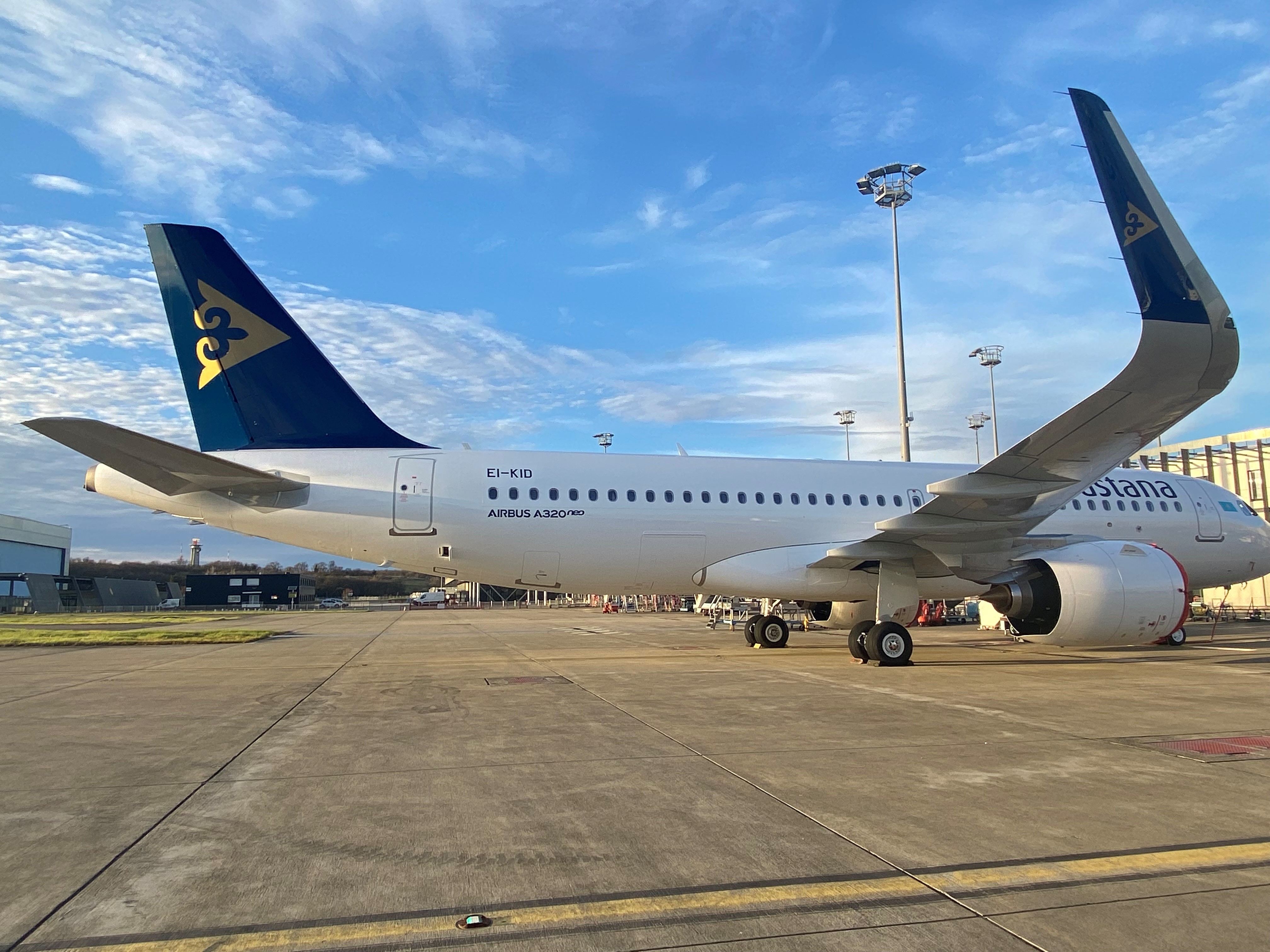
“Under our Pratt & Whitney mitigation plan, we took early action to rest engines in the low seasons, secure additional aircraft and spare engine capacity," said Foster. "We added eight (net) aircraft in 2024, ahead of guidance, the fleet has subsequently expanded to 60 and is expected to reach 63 aircraft by year end.” The company expects to have 84 aircraft by the end of 2029.
The group added four A320ceo family aircraft during the year, and expects an additional A320ceo in the first quarter of 2025. Additionally, the company has a total of 13 spare engines to support its A320neo family fleet.
The company's revenues for the year were up 11.5% to $1.3bn, while fourth quarter revenues were up 14.1% to $312.7 million. This was driven by an 11.2% increase in passenger numbers, reaching 9 million for the full year. Quarterly passengers were up 6.9% to 2.2 million.
Load factor averaged at 83.5% for the year, up 0.7 percentage points, while quarterly load factor grew 2.6 percentage points to 81.7%. Foster said the increased load factor was driven by growing demand for air travel across Kazakhstan.
The company also signed a memorandum of understanding (MoU) with China Southern Airlines for a set of codeshares across China, Kazakhstan, as well as potentially east and central Asia, and Caucasus.
Capacity for the year was up 9.2% for the year and up 5.8% for the quarter. Revenue passenger kilometres (RPK) were up 10.1% for the year and up 9.2% for the quarter. Unit revenues were up 2% for the year to 6.78 cents and 7.9% for the quarter to 6.63 cents. These outpaced unit costs, which were up 2.7% for the year to 6.02 cents and up 3% for the quarter to 6.16 cents.
As of the end of the year, the company's net debt to EBITDAR was 1.2x.